Thousand-Device Access Control at a Hospital in Guangdong

-
Client Profile
A hospital in Guangdong Province is a large, newly built Grade 3A general traditional Chinese medicine hospital, with a building area of over 380,000 square meters. It was completed at the end of 2023. The campus is grand in scale and includes outpatient and emergency departments, inpatient departments, medical technology departments, and a large number of key controlled areas, such as doctors’ offices, medical device rooms, finance rooms, power distribution rooms, and waste storage rooms. From the early stage of construction, the hospital planned a high-standard smart hospital system, requiring the establishment of a fully covered, highly secure, convenient, and efficient intelligent access control management system to ensure personnel access order and internal security in the new campus.
-
Customer pain points
Urgent need for control of key areas: The new campus involves a large number of restricted areas, such as device rooms, finance rooms, and power distribution rooms. Traditional keys or card swiping carry risks of loss and unauthorized use by proxy.
Highly complex personnel structure: The hospital includes multiple roles such as doctors, nurses, administrative staff, logistics staff, cleaning staff, patients, and family members, each with different permission levels. Traditional access control makes fine-grained permission assignment difficult.
Gap in visitor management: For family visits and external visits in inpatient areas, family members or nurses traditionally had to manually identify and allow entry, resulting in low efficiency and no effective review or traceability.
Special requirements for identity recognition: It is normal for medical staff to wear masks and caps in their daily work. Traditional facial recognition accuracy drops sharply in such occlusion scenarios, affecting access efficiency.
Lack of a data foundation in the new campus: As a brand-new campus, it needs a unified access management platform to carry all current and future access control data, facilitating the hospital’s security audits and management decisions.
-
Cooperation Plan
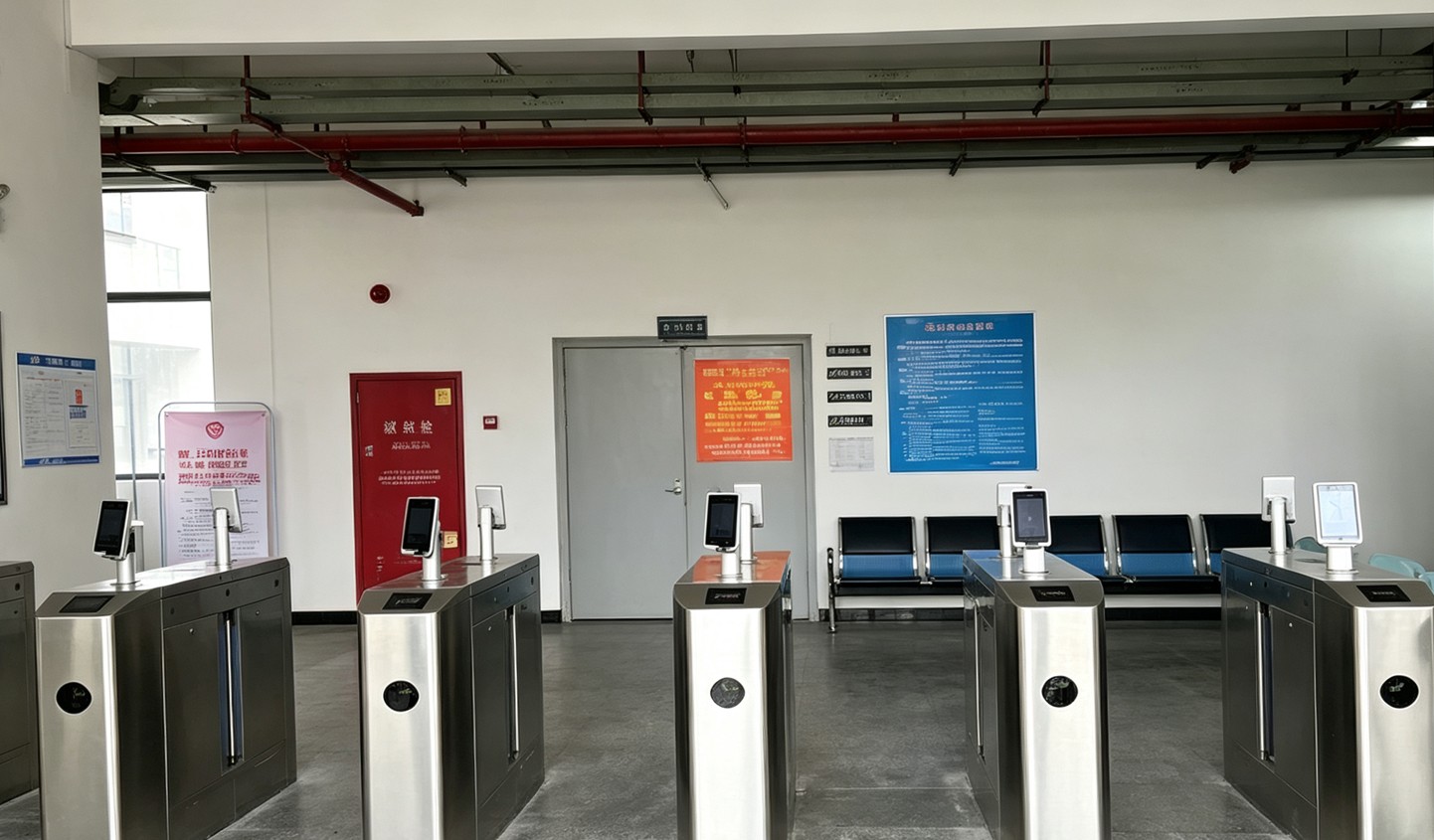
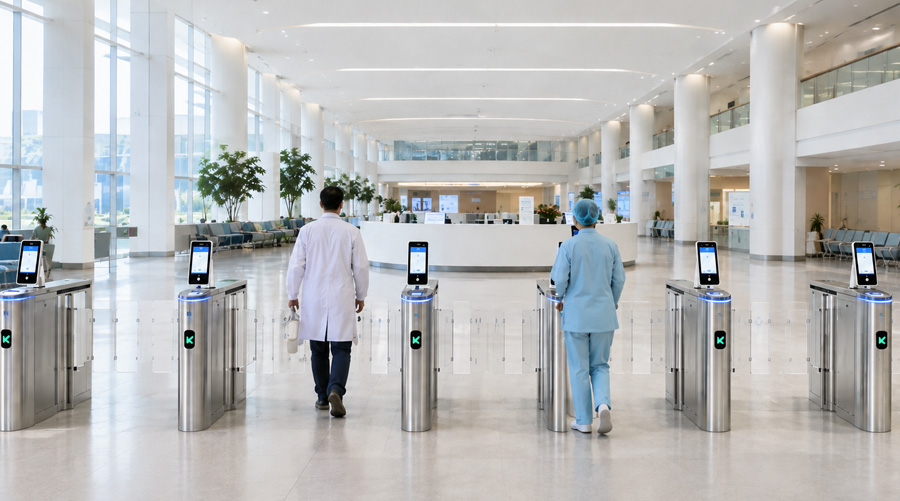
SenseTime provides one SenseLink management platform and has fully installed 1,030 Pass S7 panels in key locations across the campus. The system covers all key areas, including doctors’ offices, medical device rooms, finance rooms, pharmacies, power distribution rooms, and waste storage rooms. Medical staff can use facial recognition access throughout the hospital, with high-precision recognition supported in occlusion scenarios such as wearing masks and caps. Channel ecosystem partner Guangdong Mingde built the upper-layer business platform and connected it to SenseLink APIs, enabling online visitor appointments and facial recognition entry to the corresponding floors after administrator approval. The platform assigns differentiated access permissions to different roles, enabling zone-based and time-based control, and uploads and aggregates all access records to form unified access control management across the hospital.
-
Implementation results
Ultra-large-scale medical campus deployment: A total of 1,030 Pass S7 panels cover all key locations in the newly built 380,000-square-meter campus, making it one of the leading projects in terms of single-site panel deployment in hospital scenarios.
Security control in key areas: All offices, device rooms, finance rooms, power distribution rooms, etc., have achieved facial recognition entry, effectively preventing unauthorized personnel from intruding and eliminating security vulnerabilities caused by the loss of traditional cards.
Seamless and convenient access for medical staff: Even when wearing masks and caps as part of daily work, SenseTime’s algorithm can still recognize quickly and accurately. Medical staff can pass within seconds without removing masks, without affecting clinical work efficiency.
Standardized and orderly visitation management: Family members can make online appointments; after approval, they can use facial recognition access at designated times and authorized floors, achieving closed-loop digital management of the entire visitation process.
Unified and visualized data across the hospital: All access records are uniformly fed into the SenseLink platform, meeting the campus’s requirements for traceability and auditability of access by various personnel and providing data support for security incident review.
Benchmark effect for new campus: The project has greatly improved the overall smartization level and image of the Nansha branch, and also provides a referable standard model for intelligent access control construction in other campuses in Guangdong Province and even large newly built hospitals in China.